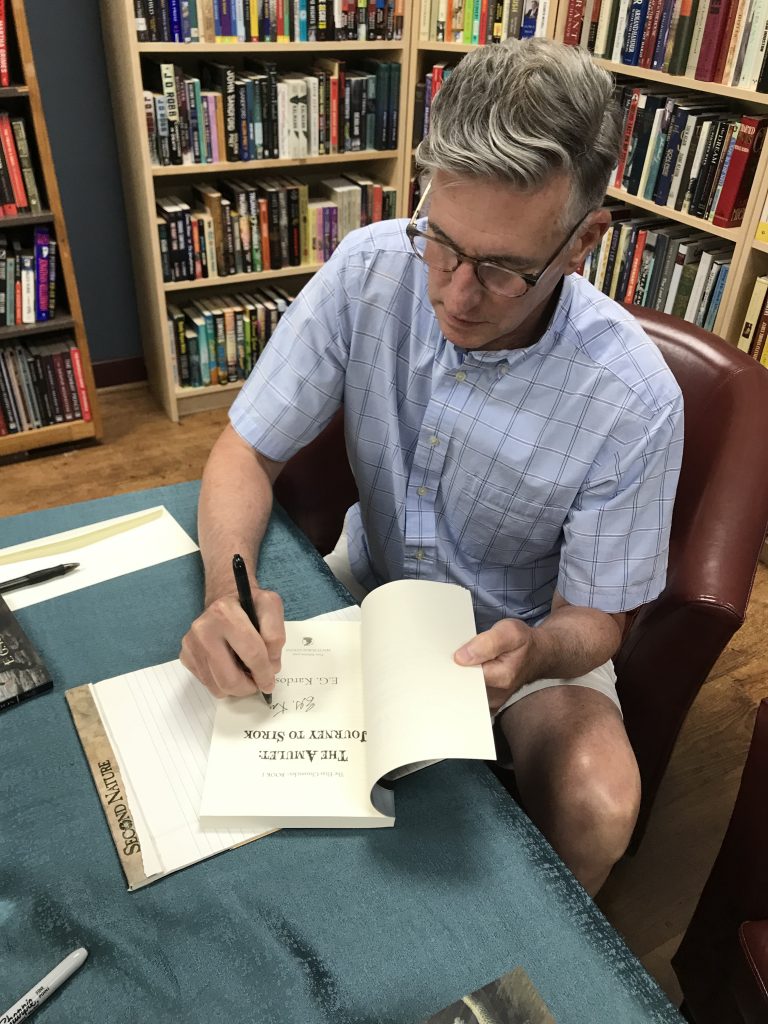
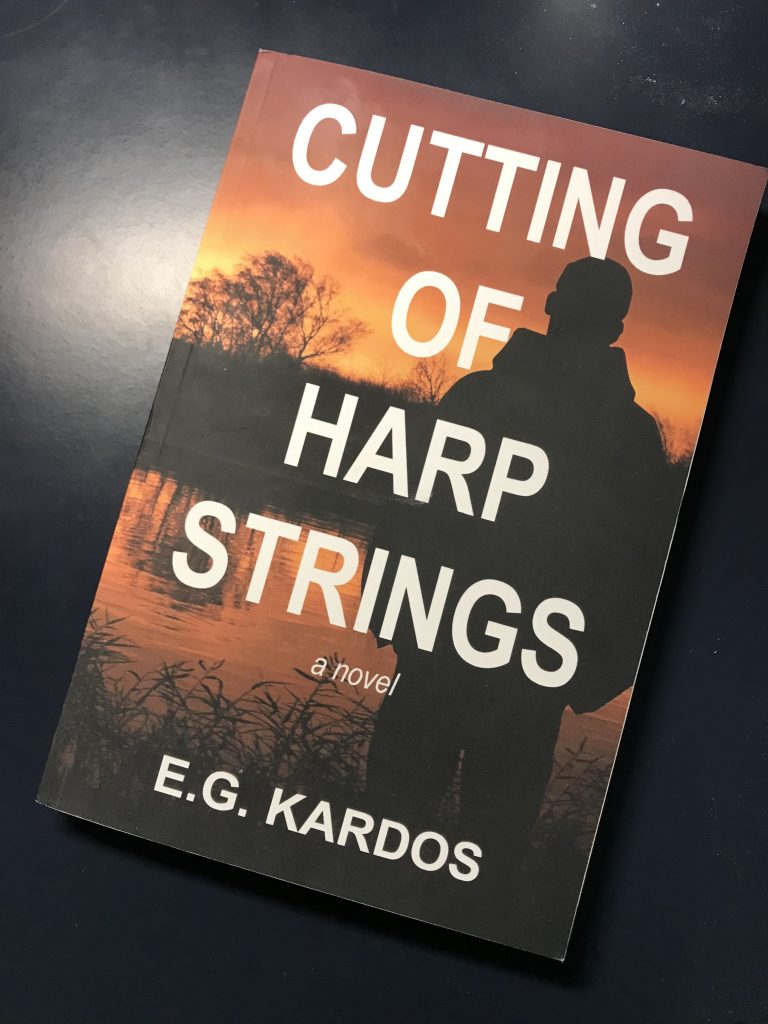
After discovering my books, Dr. Steve Bickmore, a national expert in YA Literature, read Cutting of Harp Strings and invited me to sit down with him to discuss the novel and my series, The Elias Chronicles.
Why Getting His “thumbs up” is Pretty Cool
Dr. Steve Bickmore is a national expert and scholar in the field of Young Adult Literature. His continuing work in YA literature brings scholars, professors, and readers together with authors in a way no one else has done before, creating awareness of YA literature. A retired Professor of English Education at UNLV, he is a past editor of The ALAN Review (Assembly on Literature for Adolescents of NCTE) and a past president of ALAN.
“If you are into realistic fiction like The Catcher in the Rye, A Separate Peace or other boarding school books then you should start with Cutting of Harp Strings.”
Dr. Steven Bickmore is a national expert and scholar in the field of YA Literature
It is a coming-of-age/bildungsroman novel by E.G. Kardos about the deep friendship between two polar opposite teenage boys, Eli and Aiden, exploring themes of love, self-discovery, and the meaning of life through their experiences in the 1970s. The story follows Eli’s journey as he reflects on his past and the impact Aiden had on his life, leading to a poignant and emotional narrative.
About E.G. Kardos
I am a fiction writer and the author of five books. My writing draws inspiration from the beauty surrounding us all—both in nature and in each other. Spirituality, friendship, love, and our connection to the universe inspire me to write. Here’s more about me and my books.
Coming-of-age or bildungsroman? When you hear the word “bildungsroman” what’s your initial thought? You probably have a good idea of what “coming-of-age” means in literature. For most, bildungsroman is not a term we use or hear regularly. If I had to guess, very few people know much about it. I was among this group until a few years ago as I used the term coming-of-age broadly. However, there are distinct differences between coming-of-age and bildungsroman novels.
The origin of the genre is German, where the word “bildung” means “formative” and the word “roman” means “novel”. Since bildungsroman novels are among my favorites I know plenty of others appreciate this genre. However, it is safe to say that most of us might not recognize the term so I thought I would share some thoughts.
So what is a Bildungsroman?
A bildungsroman is a coming-of-age story highlighting a young person’s psychological and moral development. Typically written in the first person, the protagonist shares their journey to maturity.
You might say that sounds like just another coming-of-age novel. A bildungsroman is always a coming-of-age story whereas not all coming-of-age novels are bildungsroman. A bildungsroman delves into themes of self-discovery and the search for identity. A protagonist’s inner journey including their values, spirituality, and understanding of the world is always a part of the bildungsroman.
A bildungsroman delves into themes of self-discovery and the search for identity.
Coming-of-Age versus Bildungsroman
A coming-of-age novel is a broader designation that oftentimes refers to any novel in any genre that explores the experiences and challenges of a character’s journey from childhood to adulthood. Coming-of-age stories emphasize growing up or coming to terms with the world. The operative phrase is coming to terms with the world. The way I look at it, in a bildungsroman, the protagonist is coming to terms with their view of the world that is found deep within them. As an actual genre or sub-genre, depending on who you talk to, these stories specifically focus on the protagonist’s psychological and moral development.
Although there are others, the major difference between a coming-of-age and a bildungsroman novel is that the protagonist mostly grapples with external challenges. In a bildungsroman the protagonist’s challenges are deep inside of them regardless of where they are in the physical world. Although in some coming-of-age stories, the protagonist struggles with internal issues, their loss of innocence may center more around relationships, sexual awakening, death and mortality, family issues, or social justice concerns.
The Structure of a Bildungsroman
Loss – the protagonist endures a profound emotional loss
Journey – because of their loss, the character embarks on a journey. The journey can be physical in nature, metaphorical, or both. They search for answers to what gnaws at them with hopes to better understand the world and how they fit or must navigate in that world.
Obstacles/conflict and growth – But as the story continues, like forcing a square peg in a round hole, the protagonist makes decisions that are not always the best. They eventually, willfully or not, resolve themselves to accept society’s ways.
Maturity/enlightenment – Psychological growth and change lead to, maturity. Many times the protagonist helps others who are on the same journey.
Although I have found the same books on lists for both bildungsroman and coming-of-age novels, the following, I feel, seem to be good examples of bildungsroman novels:
Jane Eyre by Charlotte Brontë
A Separate Peace by John Knowles
Great Expectations by Charles Dickens
The Catcher in the Rye by J. D. Salinger
To Kill a Mockingbird by Harper Lee
Call Me By Your Name by André Aciman
The Perks of Being a Wallflower by Stephen Chbosky
What do you think? Are all of these books bildungsroman? Coming -of-Age? What books would you add to the list? Which ones would you remove?
A Review of Sorts – some of my brief thoughts: A Separate Peace by John Knowles
One of my favorite books in this category is A Separate Peace. I first read it at age fifteen and it made an indelible impression on me. It inspired my novel, Cutting of Harp Strings many years later.
The novels I love evoke strong emotions and provoke thought. A Separate Peace does this for me as I experienced each moment alongside Gene during a poignant period of his life. He navigates a friendship—a love—that is difficult for him to understand. I know he would do anything for a “do-over” and I empathize with him and Finny.
Gene, the protagonist, tells the story of when he was a boy full of jealousy and self-doubt to an adult who learns from his mistakes and finally accepts the consequences of past actions.
With World War II as a backdrop, Knowles compares and contrasts both societal and personal loss of innocence. Gene struggles with his complex relationship with his roommate, Finny, as the immorality of war casts a shadow on all they do.
A good book is worth reading many times, and I have done just that. Each time, I learned something new about this once-in-a-lifetime friendship. Like all relationships, it is full of joy and pain. Knowles was a master at lulling us into what seems to be a simple and innocent adventure but is, in truth, a deep and dark journey within. It reminded me that we must always search for the truth. Finding it, however, can be elusive; we may hear the voice within, but listening to it is another matter.
I hope your next read is a bildungsroman. I hope to hear from you.
NOTE: This is a great source for more information on writing – Master Class
About E.G. Kardos
I am a fiction writer and the author of five books. My writing draws inspiration from the beauty surrounding us all—both in nature and in each other. Spirituality, friendship, love, and our connection to the universe inspire me to write. Here’s more about me and my books.